
What Does Your Park Tour Look Like?
What Does Your Park Tour Look Like?
Holiday home buyers choose the park before they choose the home. Your park tour is where that decision gets made.
Most holiday home sales offices put a lot of thought into their show homes. Fewer put the same thought into the hour around them: the conversation before anyone steps outside, and the route a buyer walks to get there.
Yet that hour is where buyers make up their minds. They aren't only buying a lodge or a static caravan. They're buying the walk to the clubhouse, the view from the decking, the feel of the place on a Saturday morning and the people they'll see every time they visit. A home can be swapped for another model. The park can't.
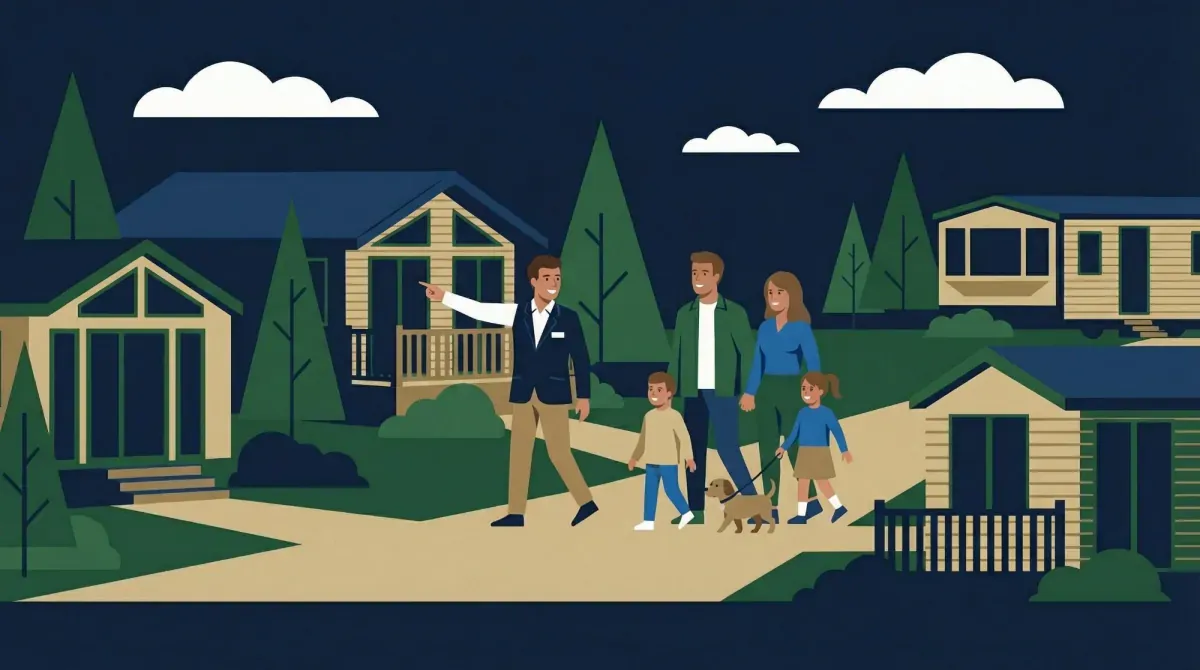
So it's worth asking honestly: what does your park tour look like? Both the conversation and the walk.
Part One: The Conversation
Get to know them before you recommend anything
The most common mistake on a park tour is starting with the product. The buyer arrives, the advisor picks up the keys to the newest show home, and the tour becomes a walk to whatever needs selling.
The best tours start the other way round: with a coffee, somewhere comfortable, and a genuine interest in the people in front of you. You can't recommend the right home, or the right part of the park, until you know who you're recommending it for.
It doesn't need to feel like an interview. Most buyers are happy to talk about their holidays, their family and what they're hoping for, if you ask and then listen properly.
Questions worth asking
- Who will use the home, and how often? A couple planning long weekends needs something different from a family with three children and school holidays to fill.
- What do they love about their holidays now? Walks with the dog, the beach, peace and quiet, entertainment for the grandchildren? Their answer tells you which part of the park to show them.
- Who else is coming? Dogs, grandchildren, elderly parents. Accessibility, steps and distance to facilities matter more than the layout of the second bedroom.
- What does a perfect weekend here look like to them? Let them describe it. You'll learn more from that than from any form.
- What budget and timescale are they working to? Ask plainly and without pressure, and ask how they're planning to fund it.
- Do they have a holiday home to part-exchange? Better to know now than at the end of the tour.
- What would stop them buying? Site fees, the drive, a partner who isn't sure yet. Every buyer has a worry, and it's far better heard early than discovered after they've gone home.
Then shape the tour around them
Once you know what matters to them, plan the route around it. Don't show them everything; show them what fits.
If they want peace and quiet, walk them through the quieter end of the park first, not past the play area on a busy Saturday. If they have a dog, show them the dog walk and where they'd let the dog out first thing in the morning. If the grandchildren are the reason they're buying, start at the pool.
Recommend two or three homes that genuinely suit them, and say why each one does. A buyer who feels understood trusts your recommendation. A buyer who feels sold to starts looking for reasons to say no.
Part Two: The Walk
Your park tour is your shop window
You've walked the same route hundreds of times. That's exactly the problem. When you see something every day, you stop seeing it at all.
A buyer sees it all for the first time. The overflowing bin by the entrance. The pothole outside the show home. The faded "Sales Office" sign. The pile of fencing panels from a job that finished weeks ago. None of these will stop a sale on its own, but each one quietly tells a buyer something about how the park is looked after, and what owning a home there might be like.
Walk your own tour first
Before your first tour of the day, walk the route the way a buyer would. Better still, ask someone who doesn't work on the park to walk it with you and tell you what they notice.
Look for:
- Litter along the route, in hedges and around the car park.
- Bins that are full, overflowing or in plain sight of the homes you're showing.
- Roads and paths: potholes, puddles, weeds, broken kerbs.
- Unfinished work: materials left out, half-done jobs, empty plots with nothing to explain them.
- Signs: faded, damaged or out of date.
- Grounds: grass cut, edges tidy, planting looked after.
- Facilities on the route: open, clean, lights working. Check the toilets.
- The show home itself: clean, warm, aired, lights on, nothing left from the last visit.
- Anything out of place: a parked works van, a broken fence panel, a skip, a burnt-out light.
- First impressions: easy parking for visitors, a clear way into the sales office, someone ready to say hello.
Fix what you can before the buyer arrives. Report what you can't, and know how you'll answer if they ask.
Look at it in every season
A route that looks lovely in July can feel very different in February. Walk it in the rain and in the dark evenings too. Have a wet-weather plan: umbrellas, a shorter route, somewhere warm to finish the conversation. Buyers who make the trip in winter can be some of the most serious, so give them the same care as everyone else.
Think about the people as well as the place
Owners and staff are part of the tour whether you plan it or not. A friendly hello from someone tidying a garden or a member of the maintenance team does more for a buyer than any brochure. Let your team know when tours are happening and where they'll go, so the park feels welcoming rather than busy.
Part Three: On the Tour
Show the lifestyle, not just the layout
When you reach a home, give the buyer time. Let them sit on the decking. Let them look at the view they'd wake up to. Talk about how they described their perfect weekend, and show them how it would work here: where the dog would be walked, where the grandchildren would play, how far it is to the clubhouse on a cold evening.
Buyers rarely remember the dimensions of a living room. They remember how a place made them feel.
Answer the awkward questions honestly
Site fees, licence length, rules about letting, what happens with part-exchange. Buyers will ask, and they'll check what you tell them. Clear, honest answers build more trust than any special offer.
Part Four: After the Tour
The tour isn't over when the buyer gets back in the car. The days afterwards are when good intentions fade.
- Write your notes straight away: who they are, what matters to them, which homes they liked and any worries they mentioned.
- Agree a next step before they leave: a second visit, a finance conversation, a part-exchange valuation, a call on a set day.
- Follow up quickly, and make it personal. Mention the dog by name, the plot they stood outside for longest, the question they asked about the pool.
- Keep everything in one place, so if a colleague picks the conversation up, they don't have to start again.
That last point is where a lot of sales offices struggle, and it's one of the reasons we built ParkPilot CRM around park tours rather than single-property viewings. But the habits matter more than the software: notes written the same day, a clear next step and a follow-up that shows you listened.
A Simple Test for Your Park
This week, walk your own park tour as if you were a buyer seeing it for the first time. Start in the car park. Ask yourself what you'd notice, what you'd wonder about and what you'd remember on the drive home.
Then think about the last three tours you or your team gave. How much of each one was spent listening, and how much was spent showing?
The parks that sell well aren't always the ones with the newest homes. Very often, they're the ones that take the time to understand their buyers and make sure the park looks its best on the way.